The night in the camp is the reason people drive nine hours across Morocco. It is also the part of the trip almost nobody describes properly — the photographs show a tent and a dune, and leave out everything you would actually want to know beforehand.
Here is the honest version, hour by hour.
Late afternoon: leaving the vehicle
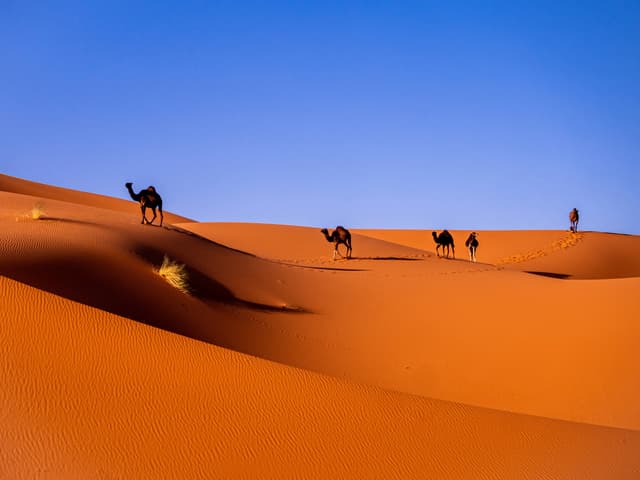
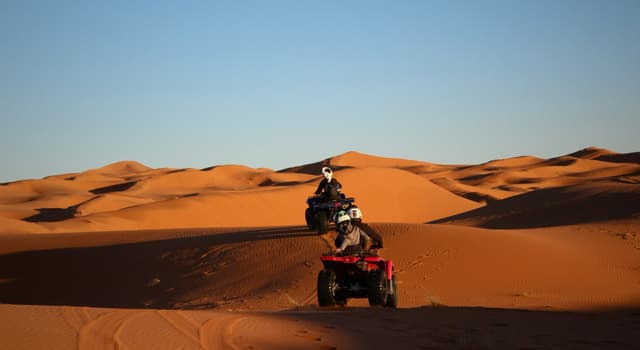
You arrive at the edge of the erg in the late afternoon, usually between four and five, and this is where the car stops. The last stretch to camp is on camel — around an hour — or by 4x4 if you would rather, which nobody will mind you asking for.
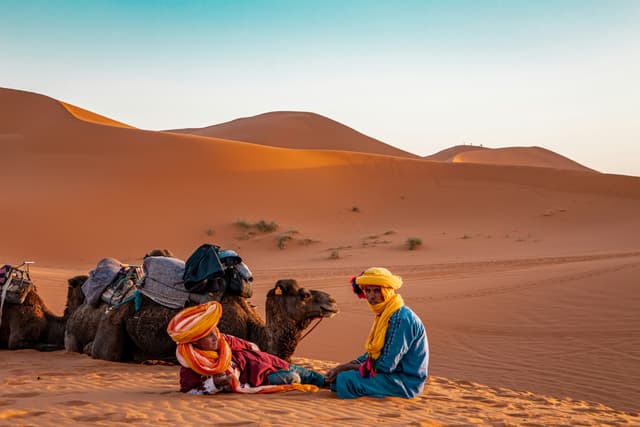
A word about the camels: they kneel to let you on and then stand back legs first, which pitches you forward hard enough to surprise you the first time. Hold the front of the saddle. The walk itself is slow and rolling, and about forty minutes in, most people discover muscles they were not previously aware of. It is worth doing once. It is not worth pretending it is comfortable.
You will want a scarf or a buff. The light is beautiful and the wind carries fine sand into everything.
Sunset: the half hour that matters
You reach camp as the sun drops, and the dunes change colour faster than you expect — pale gold to orange to deep red in about twenty minutes, then grey.
Most camps sit in a hollow between dunes, so the trick is to drop your bag and immediately climb the nearest crest rather than settle into the tent. That climb is harder than it looks — soft sand takes about two steps to gain one — but the view from the top at that moment is the single best thing about the whole trip.
Evening: dinner, drums, and the cold
Dinner is usually harira soup, then a tagine, then fruit, served under an awning or around a low table by lamplight. It is simple and it is good, and there is more of it than you expect.
Afterwards there is drumming around a fire. Whether you find this magical or a little staged depends mostly on the group you are with, and on how much you enjoy being handed a drum.
Then it gets cold. This is the thing nobody warns you about. Desert nights drop hard even after a 35 °C afternoon, and in winter they get close to freezing. Camps supply heavy blankets and you will use all of them. Bring a fleece, long trousers and socks, even in summer — the day's heat tells you nothing about the night.
The sky
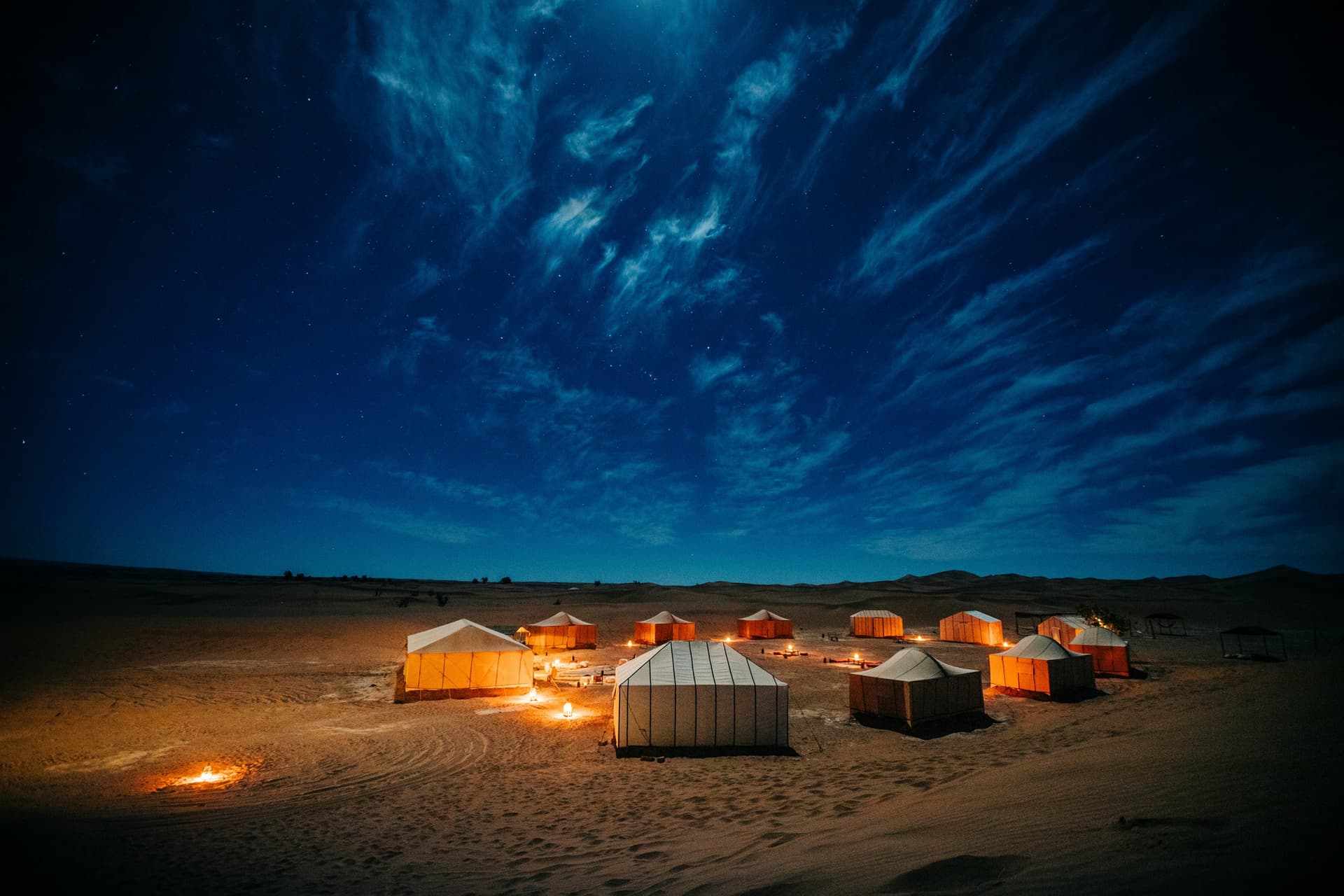
It gets extremely dark, which is the point. With no town within an hour, the Milky Way is plainly visible with the naked eye, and it is the reason to stay awake past the fire.
If you want photographs of it, bring anything that can hold a shutter open for fifteen seconds and something to rest it on. A phone on a rock does better than most people expect.
Standard camp or luxury camp?
This is the one upgrade decision worth thinking about, and the difference is mostly bathrooms.
| Standard camp | Luxury camp | |
|---|---|---|
| Tent | Shared or simple private, mattress on a rug | Private, proper bed, rugs, furniture |
| Bathroom | Shared block, basic | Private, inside the tent, hot shower |
| Power | Lamps, limited or no sockets | Lighting and sockets in the tent |
| Dinner | Communal, one menu | Communal or private, more choice |
| The dunes | Identical | Identical |
That last row is the important one. The sand, the sunset and the sky are exactly the same from both. What you are buying with a luxury camp is a hot shower, a real bed and your own bathroom after nine hours in a car — which for a lot of people, and for most families, is worth it. For one night in your twenties, a standard camp is completely fine.
Morning: earlier than you would like
Someone will wake you around six, and you will not want to get up. Do it anyway. Climb a dune, watch the light come back, and be grateful you did — sunrise over the erg is quieter and better than sunset, because almost nobody else bothers.
Breakfast is bread, jam, olives and mint tea. You are usually back at the vehicle by nine, with the long drive ahead.
What to bring
- Warm layers — fleece, long trousers, socks. Non-negotiable, in any season.
- A scarf or buff — for the wind and the sand.
- A head torch or your phone — camps are lit, the walk to the bathroom often is not.
- Wet wipes — a standard camp's shower situation is variable.
- A small bag — you do not need your suitcase in the dunes. Leave it in the vehicle.
- Cash — for tips at the camp, in small notes.
Read next
- Merzouga or Zagora? Choosing your Sahara desert trip
- How many days do you need in the Sahara?
- The Morocco Sahara desert, from Marrakech — the full guide
Sleep in the dunes, not beside a road
Tell us your dates and how many of you there are, and whether you want a standard or a luxury camp. Private vehicle, your own schedule, fixed price agreed before you go.